
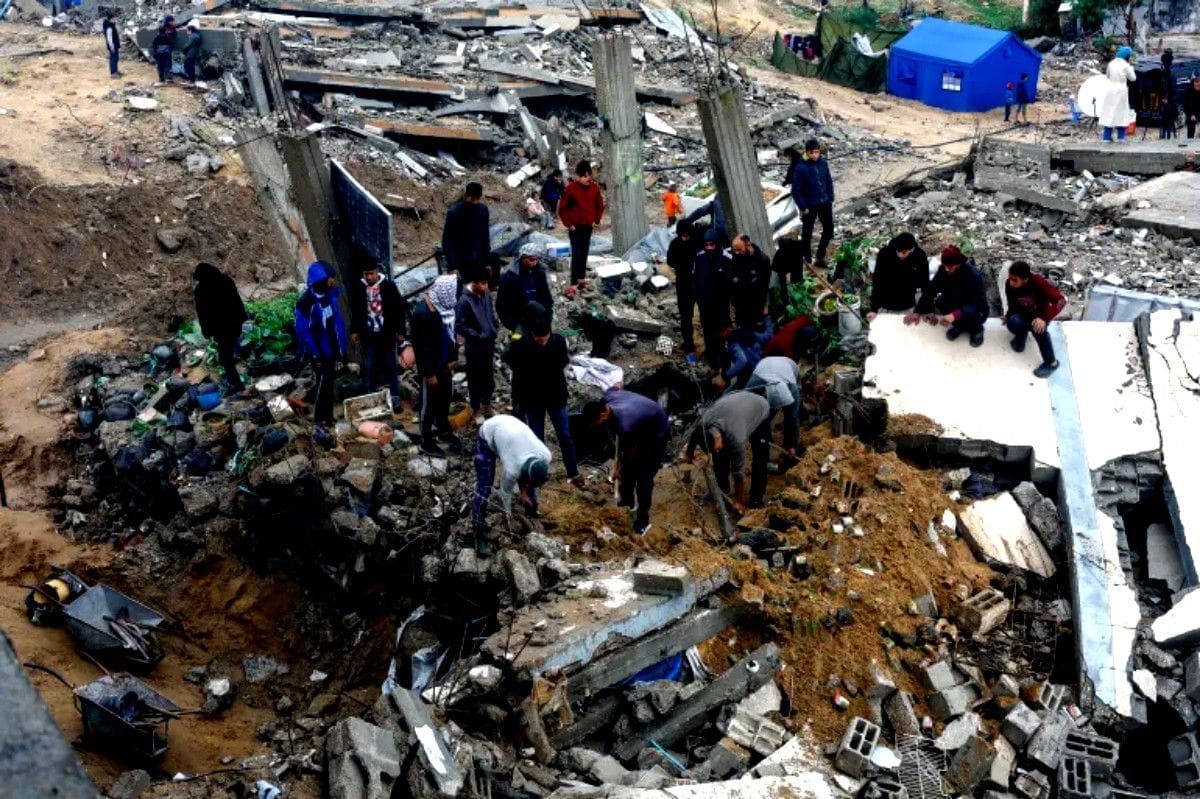
At least 15 homes collapsed on their inhabitants in Gaza during last week’s storm, as the Strip’s residents endure a devastating winter amidst a worsening humanitarian crisis exacerbated by the Israeli occupation’s prevention of essential aid deliveries to protect them from the rain and strong winds.
As part of its efforts to document the escalating humanitarian crisis in the Gaza Strip, the Sanad News Agency, a fact-checking arm of Al Jazeera, confirmed the complete or partial collapse of at least 15 homes, resulting in casualties, including children.
Satellite images also revealed the severe damage inflicted on tents sheltering displaced people by the heavy rains and strong winds, particularly in Gaza City and northern Gaza. These areas have been subjected to intense and systematic bombardment during the two years of Israel’s offensive.
A map compiled by the Sanad News Agency shows that the collapses were concentrated in Gaza City, with 11 homes destroyed, in addition to four more in northern Gaza.
The data analysis relied on reports from the Gaza Civil Defense, journalists’ accounts and photographs, and satellite imagery. All this information was concentrated in the period between December 12 and 16, the days in which the sector faced a severe weather depression

According to the analysis, December 12th marked the peak of the storm’s impact on the northern regions, accounting for over 68% of all total and partial landslides recorded during that period.
A comparison of satellite images taken before the storm with those documented on December 13th, the day after its peak, reveals the extensive damage inflicted on tents by the heavy rains, flash floods, and strong winds. These forces uprooted and swept away numerous tents and submerged entire camps, corroborating reports from the Civil Defense and footage shared by activists and journalists.
The Interior Ministry in the Gaza Strip confirmed on Friday the deaths of 14 Palestinians due to the storm. Some died as a result of the storm’s effects, while others perished when homes and buildings partially or completely collapsed on their inhabitants due to the rain. Three children also died from exposure.
The Government Media Office in Gaza stated that the storm, dubbed “Biron,” exposed the depth of the entrenched humanitarian crisis in the Strip, estimating initial losses at approximately $4 million

The office also recorded damage to and flooding of more than 50,000 tents belonging to displaced people, along with widespread destruction of infrastructure, road networks, and water lines. Large quantities of food supplies were also damaged, vast agricultural areas were flooded, and field medical points were damaged.
The office issued an urgent appeal, stressing the need for the immediate entry of shelter materials, tents, mobile homes (caravans), and emergency supplies. This appeal is in accordance with humanitarian protocols and the terms of the ceasefire agreement that came into effect on October 10th, which stipulates securing the needs of civilians in such circumstances.
According to the Government Media Office in Gaza, the Israeli occupation has not adhered to the agreement’s requirement to allow the entry of 600 truckloads of aid daily. The office confirmed that the average number of trucks Israel has permitted to enter the Gaza Strip since the agreement came into effect has not exceeded 234 per day.
Israel is preventing the entry of materials needed by Gaza residents to protect themselves from winter rains or to repair their bombed homes, while the start date and mechanism for reconstruction remain unclear.